
Apothek Grand Rounds: Financing Universal Health Coverage
Public lectures at the University of Texas Medical Branch & San Antonio

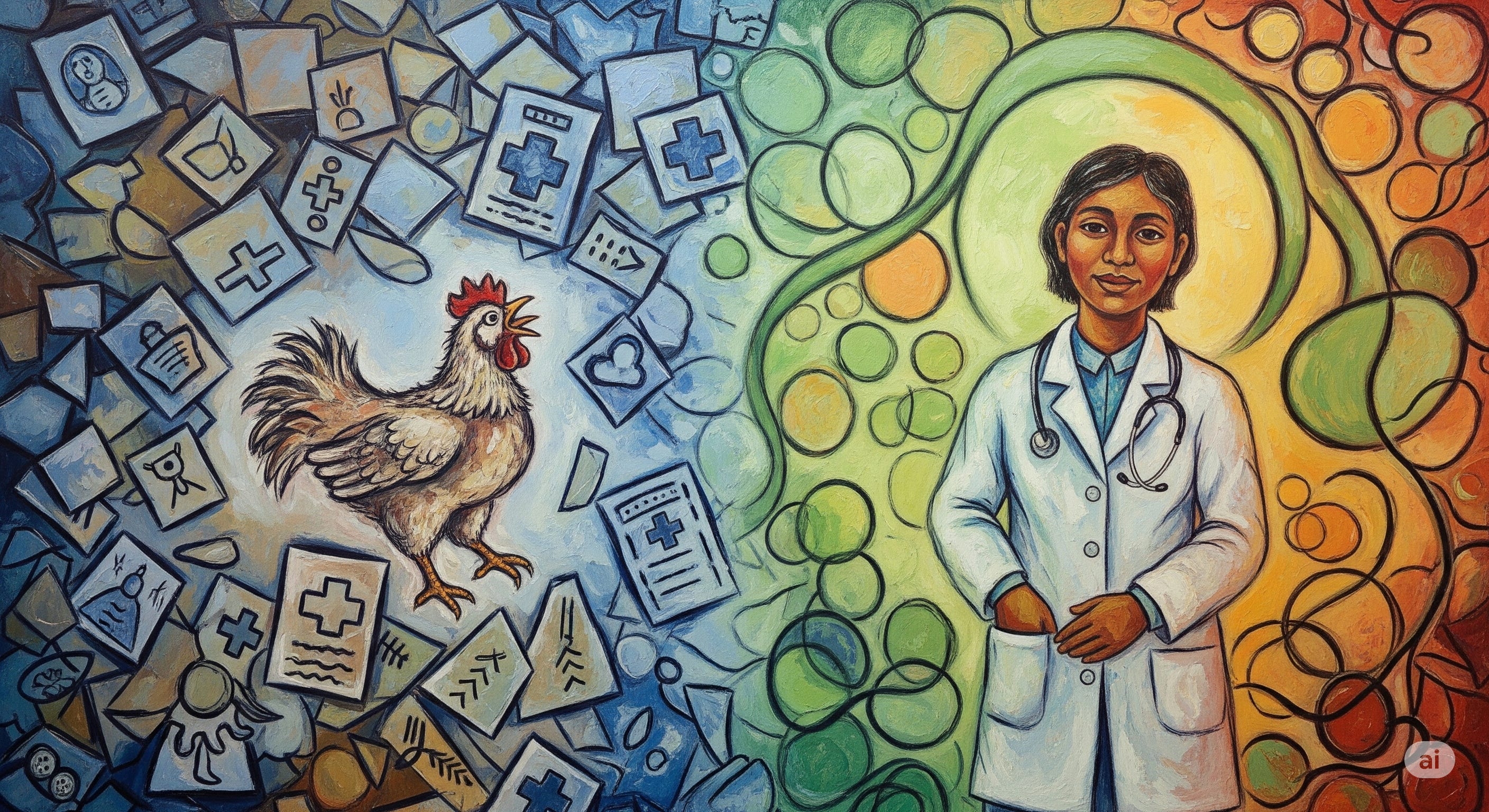
I recently joined MPH candidates from the University of Texas Medical Branch (UTMB) School of Public and Population Health for a deep dive into health financing for universal health coverage. And last month, I delivered a similar lecture for health professions students at UT at San Antonio (UTSA). I shared my experiences as both a physician treating patients and a health economist analyzing systems. We drew from my time living and working across North America, Europe, Africa and South Asia. During both lectures, we explored community health workers as a promising health equity strategy, discussed the challenges of donor dependence vs. domestic health financing, and tackled the political realities that stand in the way of universal coverage here in the US.
The bottom line? We know exactly how to build better health systems. Our biggest obstacle isn't a technical challenge, it's politics.
Key Highlights on Health Financing:
I begin with three key summary points, and a definition of “universal health coverage”:
The healthy will pay for the sick no matter what system we have.
Humanity doesn’t have unlimited resources to deploy for health, so health services are rationed in one way or another.
Either we as a society can decide how to ration it by designing our health financing system, or we can allow the financing system, however it evolves, to dictate how it is rationed.
Universal health coverage as a health system goal means that all members of society can access the health services they need, and that these services are provided with sufficient quality. Access here also includes financial risk protection, meaning that individuals should not experience significant financial hardship or impoverishment while seeking these services.
Health financing in this context is both a framework for understanding how health systems function and a diagnostic tool for evaluating their strengths and weaknesses. It includes three core functions aimed at delivering services and sharing financial risks of unanticipated health expenses:
Resource Mobilization: This is how money is collected, or the process to generate or mobilize resources for the health system. Options include taxes, insurance premiums, individual out-of-pocket payments, and donor funds.
Pooling: This is how funds are combined to spread financial risk across population groups.
Strategic Purchasing: This is how systems decide what to buy, from whom to buy, and how to pay.
Audience Q&A:
My lectures cover the technical frameworks, but the real conversations happen during Q&A. Here's what students want to know, and my responses:
What would be the first steps to transition to a universal health coverage system in the United States?
“We need people to get angry first… if any of you have dealt with our health system during any real crisis for yourself or a loved one, and this might be after a severe accident, after a major health diagnosis, or even just changing jobs… and if you’ve experienced that and you're not angry yet, I’m not sure what more it will take.”
“The bottleneck is politics, and voters who are angry enough to make this a voting issue. Right now your zip code and your employer determine when you will die. And until we decide that that’s unacceptable we’ll keep having the same conversation every year.”
From your experience, what helps countries move from relying on donor aid to being more financially-self sufficient?
“This requires national commitment that cuts across all levels and sectors of government… if the Ministry of Finance still sees health spending as draw down or expense, rather than investment, we won’t see much progress.”
“We need to shift to a perspective that says: It’s health that makes money possible, it’s health that makes the economy possible.”
What are some ways we can build governance capacity both here in the US and in countries around the world to tackle these challenges?
“The breakthrough happens when we stop thinking about capacity building as teaching people what we know or sharing information, and instead we think about it as supporting institutions so that they can learn, adapt, and solve the problems we don’t even know are coming our way.”
How do you personally hope to continue contributing in this space moving forward?
“We're all searching for ways to continue advancing health equity and planetary health, and that path will look different for each of us.”
“Some will maintain a global focus. Others are shifting to domestic work here in the US. Still others are finding hyperlocal ways to contribute. Just this week, in a message exchange with a dear colleague in Dhaka, I suggested that our role isn't simply to survive these times… it's to write the next chapter.”
Closing reflections on public health?
“I think public health, preventive health, preventive medicine… it's one of those things where whatever amount you spend on it, if you're successful, people will accuse you of spending too much. If you're unsuccessful, meaning there's a bad outcome like a pandemic, people will accuse you of not doing your job right, not doing enough, or not doing it properly.”
Moving Forward
The next generation of public health leaders ask hard questions about political feasibility, implementation timelines, and maintaining momentum when progress feels slow.
My responses during audience Q&A’s begin with being honest about where we are. Right now, the United States spends more on healthcare than any nation on earth. We ration care by the ability to pay rather than by need. We tie access to life-saving treatment to employment status. Our health outcomes and daily experiences with the health system both reflect these choices.
Change begins when we stop tolerating our current system. It accelerates when we recognize that health is the foundation that makes everything else possible: economic growth, educational achievement, and community resilience. And it succeeds when we build institutions capable of adapting global experiences while learning, iterating, and serving everyone.
We have the blueprint. We need only to begin to build it.
Thank you for joining Apothek Dispatch. I'm excited to share this journey with you! This newsletter is free to everyone, thanks to the generous support of fellow Apothek Dispatch members. To support the effort, subscribe or upgrade below: