
From the Body Physical to the Body Digital
A book review of Vanessa Chang’s "The Body Digital"

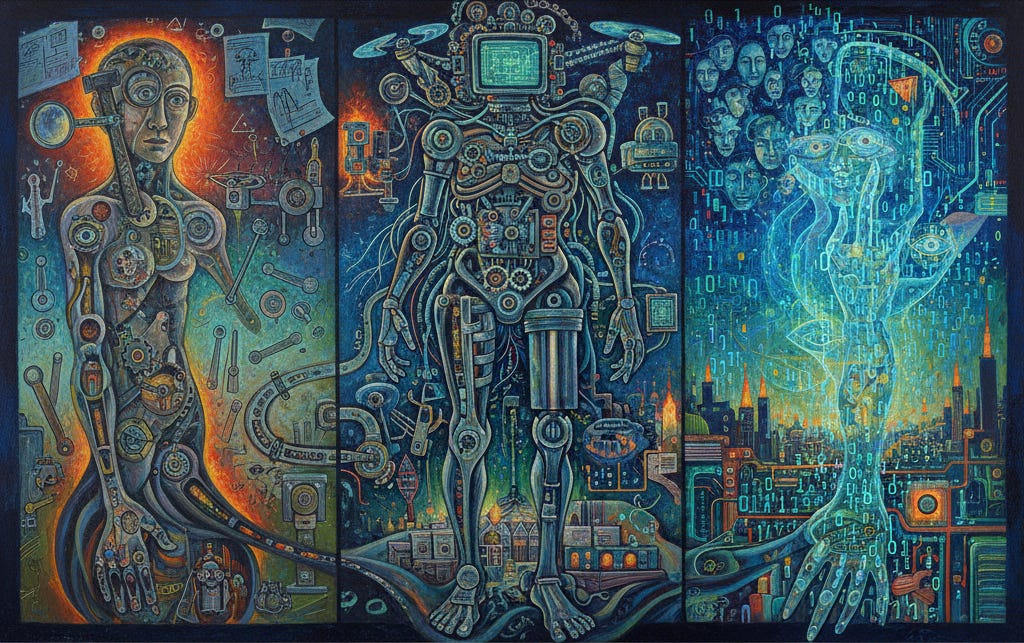
My review of Vanessa Chang’s The Body Digital was published last week in Science Magazine (read it here).
Chang’s book takes us on a journey through the body: hand, voice, ear, eye, foot, mind. Each chapter follows a similar progression. The hand: from fountain pens to typewriters to touchscreen keypads. The voice and ear: from phonographs to telephones to streaming audio. The eye: from daguerreotypes to cinema to selfies and surveillance. First came tools that extended our physical capabilities. These evolved into machines that reshaped industries and social structures. Then came digitization, translating our analog experiences into vast archives of data in ones and zeroes that could be endlessly copied, transmitted, and analyzed.
Machines and technology are part of the human story; a defining feature of the human species is our ability to create tools to extend our bodies beyond their biological limits. The hand that once shaped stone tools now swipes across glass. The voice that once echoed only in caves now travels instantaneously around the globe.
And as this technology pivots from augmentation to data capture this story takes a troubling turn. It is that very data—the digital traces of our extended bodies—that has become the new frontier of entrepreneurship and profit.
Today’s technology platforms function as walled gardens, designed explicitly to keep our attention contained in one place. Think Google Workplace, Microsoft 365, Facebook/Meta/Instagram, or the entire Apple ecosystem. Why? What we click, what we watch, where we linger, all have become the product itself.
Our data serves three lucrative pursuits. First enabling targeted advertising, allowing companies to charge premium rates by delivering tailored messages to specific audiences. Second, by fueling market research and product development, revealing exactly what features will keep us engaged and spending. Third, feeding into future generations of artificial intelligence systems.
Our lived experiences have now become training data, and AI systems reflect back our ingenuity with algorithmic mimicry. As we traverse this brave new frontier, we risk forgetting what made us reach for tools in the first place: our desire for authentic creation and connection.
Yes, technology made us human. It’s up to us to stay that way.
Thank you for joining Apothek Dispatch. I'm excited to share this journey with you! This newsletter is free to everyone, thanks to the generous support of fellow Apothek Dispatch members. To support the effort, subscribe or upgrade below:
Nice piece!
Drawing parallels between the body and digital/ E-Innovation show the developments that have taken place over time in the history of mankind.And this is just like the beginning with every new decade drowning the past one in tecnological advancements.
Thank you for the important posts you're always sharing.
That's a fascinating way to think about the history of the body and technology! And yes, quite disturbing to find ourselves being farmed as the product at this stage.